For first-time parents, discovering that their infant experiences auditory deficits routinely triggers immense shock and distress. Yet the optimistic truth is that via rapid screening and support, young children facing auditory deficits routinely attain profound developmental success. Indeed, these babies regularly develop speech capabilities, relational skills, and strong connections across their social sphere, building toward a prosperous life!
Combining traditional hearing devices with specialized cochlear technology provides two highly successful solutions for assisting infants who exhibit hearing loss. Further down, we explore how both instruments operate to enable you to choose which pathway best serves your youngster.
Grasping the Basics of Pediatric Hearing Loss
Auditory loss in newborn babies frequently stems from multiple potential origins, including:
- Key inherited genetic traits (even where ancestral histories yield no precedent)
- Active congenital infections such as cytomegalovirus (CMV) or rubella pathogens
- Adverse intrapartum events, such as fetal oxygen deprivation or early delivery
- Particular medications used in neonatal intensive care
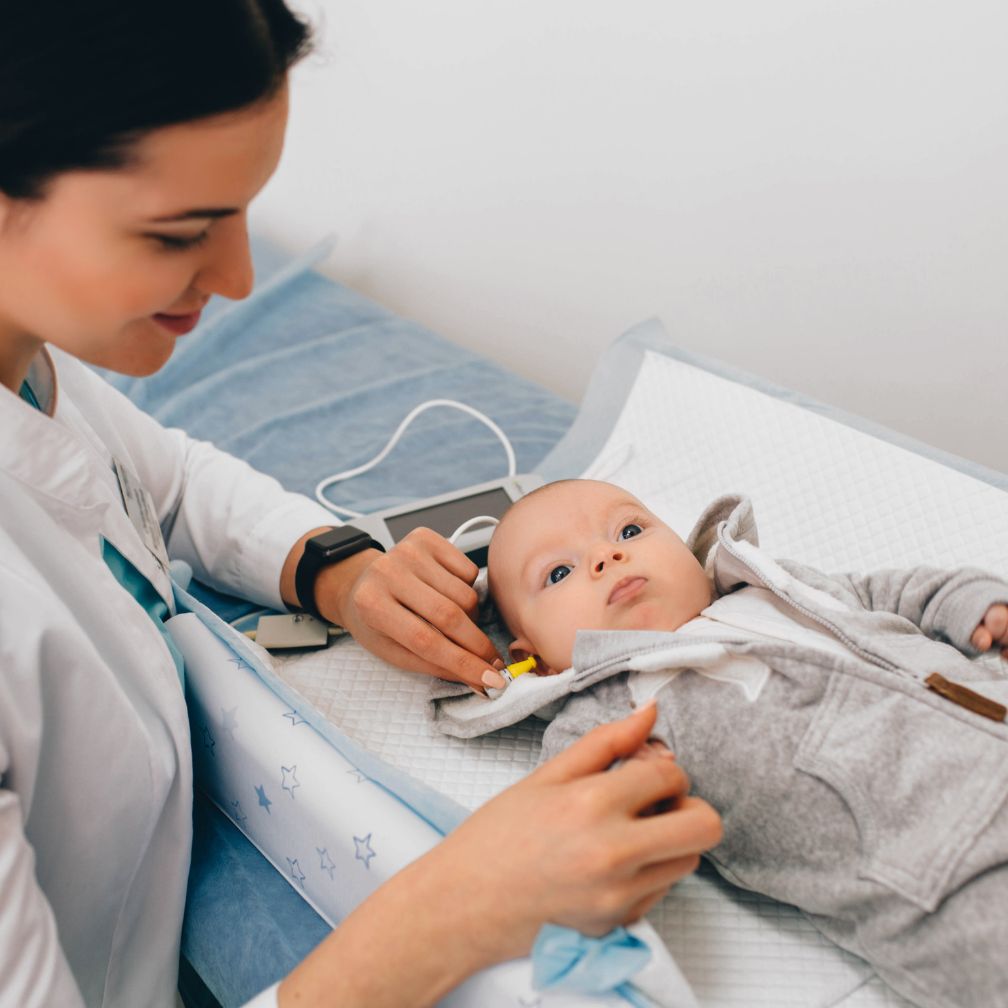
What stage carries the most weight? Rapid clinical confirmation. This necessity explains why babies in United States hospitals complete hearing tests before departing the nursery. Clinical pediatric audiology doctors faithfully maintain the official “1-3-6” operational timeline:
- Baseline screening completed inside 30 days post-birth
- Definitive hearing diagnosis established by 3 months of age
- Targeted intervention (incorporating wearable devices or care) started within 6 months of age
Achieving these critical milestones gives infants the best chance for healthy speech, language, and brain development. In the event you want clarification regarding these testing procedures, your child’s pediatrician will gladly guide you!
Wearable Hearing Aids in Infant Care
In infants identified with mild to severe auditory loss, modern hearing aids frequently serve as the initial therapeutic step. Specialized, ear-level instruments intensify acoustic waves, empowering infants to catch spoken dialogue and natural environmental sounds much more effectively.
Standard hearing aids function as:
- Proven safe for newborn infants as young as a few weeks old
- Designed with soft, comfortable ear molds that change as the baby grows
- Outfitted with secure, tamper-resistant battery latches and child-focused protective mechanisms
- Expertly programmed by a certified pediatric audiologist to align with your baby’s exact hearing needs
As your child matures, these hearing units require routine clinical adjustments to preserve physical comfort and functional efficacy.
Understanding Cochlear Implantation for Babies
If a young child displays severe to profound sensorineural deficits while showing insufficient progress with hearing aids, specialists often advise a cochlear implant. In direct contrast to standard hearing aids, cochlear implant systems:
- Demand a dedicated surgical procedure for placement executed by a pediatric specialist
- Safely bypass damaged structures within the inner ear
- Convert acoustic waves into direct electrical signals that trigger the acoustic nerve directly
Surgical cochlear devices stand as:
- Approved under FDA regulatory guidelines for children starting at 9 to 12 months old
- Most successful when paired with early habilitation programs and strong parental involvement
- Recommended only after thorough diagnostic testing by an expert audiologist and ENT specialist
Such a comprehensive process requires high-resolution imaging, detailed hearing tests, and setting realistic expectations for future communicative success.
Hearing Aids vs. Cochlear Implants: What’s the Difference?
- Mild to severe hearing challenges suit Hearing Aids; Severe to profound hearing loss: Cochlear Implants
- Non-Invasive wearable design: Hearing Aids; Invasive (Surgical): Cochlear Implants
- Physical sound amplification: Hearing Aids; Digital electrical impulse transformation: Cochlear Implants
- Application starts during early infancy: Hearing Aids; Implantation starts at 9-12 months: Cochlear Implants
Closing Perspective: Choosing Between Hearing Aids and Implants
In the event your infant receives a hearing loss diagnosis, you can rely on excellent technological options and dedicated expert support. With the help of pediatric hearing specialists, a vast majority of children attain speech and language milestones fully matching their playmates.
Whether your youngster qualifies for external hearing aids or surgical cochlear implants, acting swiftly creates a profound lifelong advantage.
Do you need professional advice regarding your baby’s current hearing health? Connect with our office today to receive a complete diagnostic assessment and personalized rehabilitation plan.