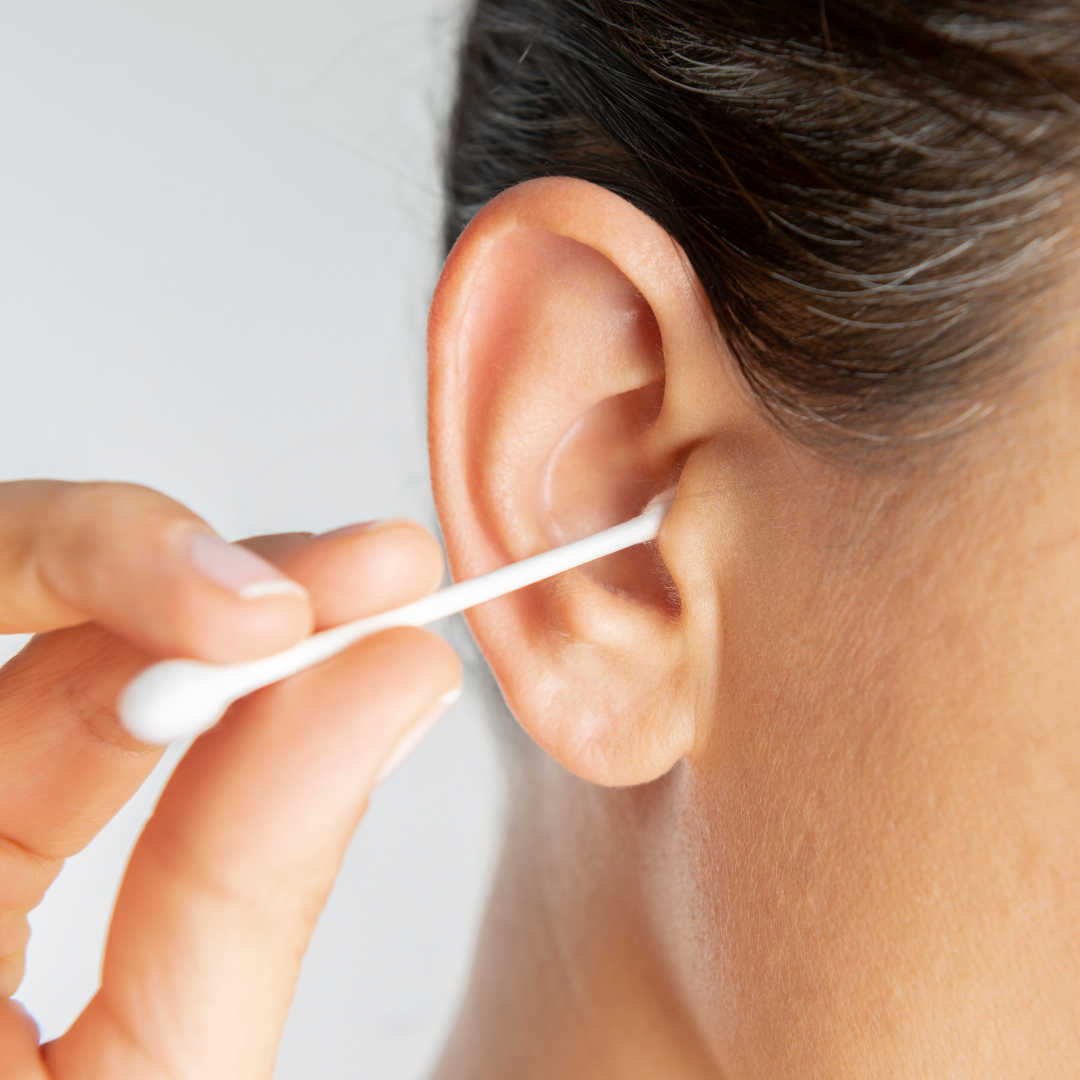
Although cotton swabs feel like accessible ear-care tools, introducing them into the canal hinders self-cleaning mechanisms and may harm your hearing. We assess whether your earwax demands professional intervention and provide customized care strategies that match your clinical profile. The auditory canal generally manages its own cleaning; however, should impaction arise, our team provides safe clinical earwax removal.
Understanding the Risks of Using Q-Tips in the Ear
Clinically speaking, earwax, or cerumen, should never be regarded as dirt or debris. Cerumen works to entrap airborne particles, deter infectious pathogens, hydrate the auditory canal, and protect thin dermal layers. Routine chewing and epithelial cell migration continuously transport spent wax toward the concha, where it falls out or clears during bathing.
Inserting a cotton swab directly into the auditory canal interferes with this natural clearance mechanism. Even if the swab gathers a trace of surface cerumen, it routinely compacts the remaining mass against the eardrum. Repeated use can pack wax into a firm blockage and create the plugged sensation that encourages even more cleaning.
While cotton swabs are acceptable for cleansing the external folds of the pinna, they must never pass into the ear canal.
Types of Ear Injuries Caused by Cotton Swabs
The skin lining the ear canal is thin and easily scratched. Microscopic tears cause acute discomfort or hemorrhage while exposing tissue to bacteria, which heightens the probability of an outer ear infection. In addition, the cotton head can loosen and become retained as an obstructing foreign object in the ear.
Possible injuries include:
- Deep mechanical cerumen impaction
- Scratches, irritation, swelling, or bleeding
- Acute otitis externa or canal infection
- Cotton swab fragments trapped inside the auditory canal
- Structural tears or perforations across the eardrum
- Injury to the tiny hearing bones behind the eardrum
- Temporary conductive loss or permanent auditory changes
- Acute tinnitus, vertigo, or intense otalgia
While severe structural trauma occurs infrequently, accidental elbow jostling, sudden slipping, or over-insertion can provoke profound injury.
Establishing Safe Intervals for Earwax Extraction
Most healthy adults have no clinical need to extract earwax on a set timetable. Healthy ear physiology steadily propels wax toward the surface, where daily hygiene cleans the external ear. Scrubbing too frequently dehydrates the auditory passage, causes persistent irritation, and raises risks for secondary infections or blockages.
Removal becomes appropriate when wax blocks the canal, prevents us from examining the eardrum, interferes with a hearing aid, or causes discomfort.
What Are Safe Ways to Remove Earwax At Home?
In the absence of earwax symptoms, allowing natural physiological clearance is universally the safest strategy. Simply cleanse the external ear using a damp, gentle washcloth, allowing the internal canal to clear independently.
If cerumen requires softening, we might suggest an over-the-counter preparation or ear drops formulated with carbamide peroxide, mineral oil, saline, or glycerin. Use only the labeled amount and for the labeled duration. Stop if the drops cause pain, marked dizziness, rash, or worsening symptoms.
Performing irrigation at home is unsafe for certain individuals and must only proceed after a clinician verifies ear safety and explains the protocol. Never use a dental water jet. Avoid ear candles, metal scoops, camera-guided tools, hairpins, and home suction devices. These hazardous instruments often cause cutaneous burns, sharp cuts, eardrum ruptures, or compounded cerumen impaction.
Recognizing When Earwax Requires Clinical Intervention
Schedule an appointment when an ear remains plugged after an appropriate softening treatment, wax appears deeply impacted, or home care repeatedly fails. Professional removal is also preferable when a person cannot safely hold still, has a narrow ear canal, uses hearing aids, or has medical or surgical factors that make drops or irrigation risky.
Seek an examination for:
- Severe ear pain, intractable itching, or outer ear tenderness
- Visible blood, purulent discharge, clear fluid drainage, or offensive ear odors
- Pyrexia or localized tissue swelling surrounding the ear canal
- The sudden appearance of tinnitus or true dizziness
- Hearing loss that develops suddenly or continues after wax removal
- Concern regarding a perforated eardrum or foreign cotton debris
- Frequent wax buildup that occludes or damages hearing aids
Sudden drops in hearing in a single ear require emergency medical attention rather than casual attribution to earwax. Early hearing testing easily separates a physical wax impaction from a critical inner ear condition.
How Healthcare Providers Extract Impacted Earwax
We initiate the appointment by visualizing the canal through a diagnostic otoscope or microscope to verify wax presence and check for signs of infection, laceration, or eardrum tears. The ideal extraction strategy is dictated by the consistency of the wax, ear canal dimensions, clinical background, past ear procedures, and patient physical stability.
Standard clinical removal options include:
- Topical cerumenolytic drops applied prior to or during the clinical visit
- Regulated mechanical irrigation with body-temperature saline for sealed eardrums
- Controlled vacuum micro-suction under continuous visual monitoring
- Manual instrument removal utilizing specialized curettes, loops, or micro-forceps
Direct visualization allows the clinician to work around sensitive canal skin and stop if discomfort occurs. Combining multiple extraction techniques is sometimes required for stubborn, dehydrated, or densely consolidated cerumen. After clearance, we conduct a follow-up visualization to ensure the canal walls and tympanic membrane show no complications. Should sensations of fullness, tinnitus, balance issues, or hearing loss persist, comprehensive diagnostic testing will isolate the true underlying etiology.
Book a Professional Earwax Evaluation and Removal
If your ears feel blocked or your hearing has changed, schedule an evaluation with us instead of reaching for a Q-Tip. Your scheduled visit includes reviewing active symptoms, past ear procedures, hearing aid status, home management methods, and individual risk factors for cerumen impaction. Contact us to request an earwax-removal appointment.