
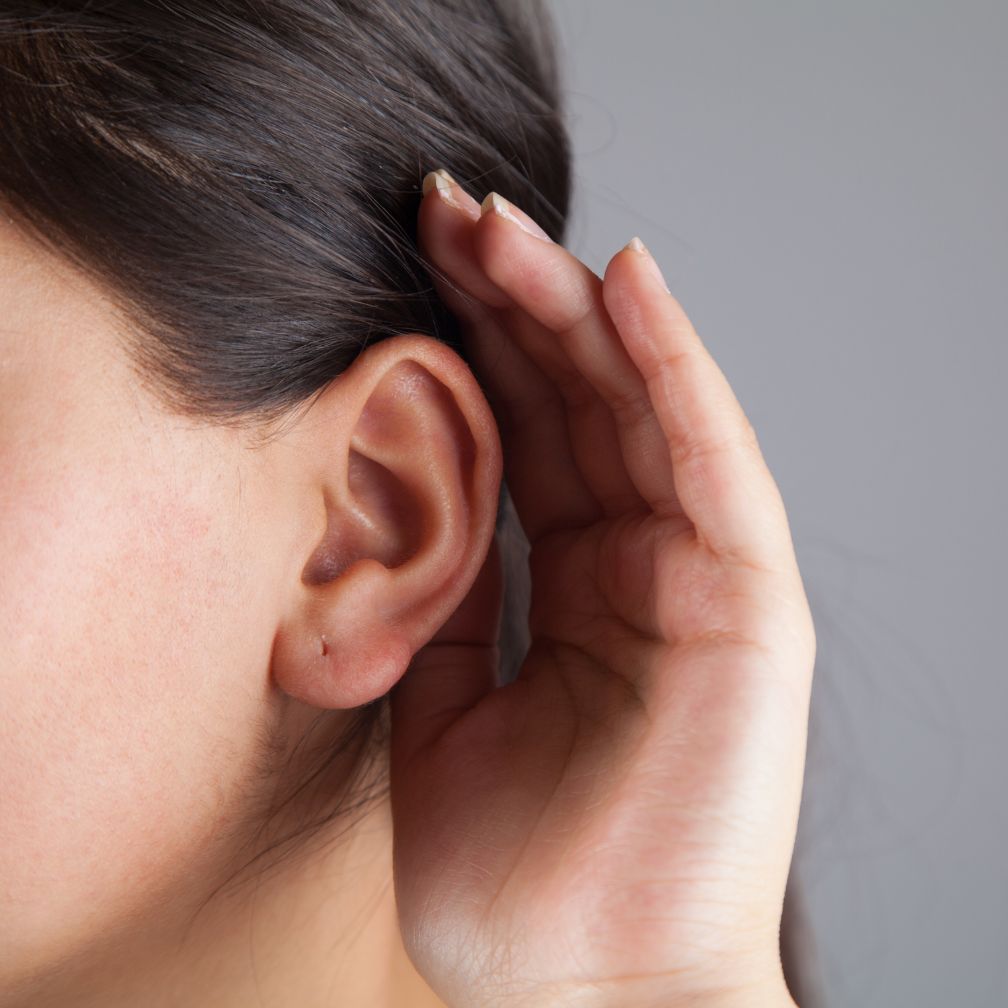
What causes that peculiar, unprompted sound that feels like ambient static or trapped air whispering in your ears? Why is this disruptive acoustic phenomenon completely silent to everyone else? You are not inventing these symptoms; the sensation is entirely real.
Fortunately, your symptoms do not point to “phantom ring syndrome,” a psychological habit among heavy smartphone users who mistakenly believe their device is vibrating or ringing in silence.
Instead, these persistent acoustic distortions are classic indicators of clinical tinnitus. And yes, what you’re hearing is real, and there are some things that can make tinnitus worse.
Fortunately, this underlying audio threshold rarely blocks your baseline ability to follow spoken dialogue. It just sounds like there’s some sound transposed on top of everything you hear.
We will examine why this persistent hum occurs, break down its clinical characteristics, and review what steps you can take to successfully alleviate the symptom.
What is tinnitus & why do I hear this white noise in my head?
Tinnitus is (usually) a form of hearing loss. It’s characterized by a constant or intermittent noise that sounds like it’s on top of what you hear. Depending on the type of tinnitus you have, it may be unnoticeable most of the time. For others, however, the unremitting hum inside their skull feels utterly deafening, causing massive psychological distress and exhausting their patience.
Most patients frequently fail to find words that accurately convey their struggle, because this subjective sensory deficit defies the imagination of anyone who has never lived it.
How can this humming noise in my head not be there? The invisible nature of the noise frequently forces individuals to question whether the symptom is purely psychological. You may find yourself asking how a silent hum can completely disrupt your concentration and impair your social interactions. Or completely sabotage your natural ability to fall into a deep, restorative sleep cycle?
Why Silence Paradoxically Amplifies Your Tinnitus Symptoms
You’ve probably noticed that the quieter it is, the worse your tinnitus gets. This occurs because the phantom signal inside your pathways no longer encounters any external acoustic competition; for instance, the average adult maintains absolute silence in their bedroom during sleep hours. They choose to run no active entertainment devices, omit music, and enforce a strict policy of zero structural sound. Furthermore, being left alone with your internal thoughts allows the unprompted ear static to command your undivided attention, initiating an anxious loop that makes the volume seem significantly louder. No matter if you battle soft whistling or intense buzzing across variable frequencies, a hushed bedroom at night establishes the exact scenario required for tinnitus to become unbearable.
Differentiating Your Symptoms: Is a Rushing Wind Sound Actually Tinnitus?
While explaining the condition to normal-hearing peers is a major hurdle, comparing notes with another person who has tinnitus can create unexpected doubt. They may be experiencing very different symptoms than your own, which might lead you to think that what you have isn’t tinnitus at all.
However, statistically speaking, your symptoms are almost certainly a manifestation of the exact same condition. The explanation is simple: this auditory deficit is incredibly diverse, crafting unique sensory experiences for each patient’s brain layout. These include, but aren’t limited to, hearing:
- The harsh hiss of old-fashioned television static
- Humming
- Buzzing
- A persistent, thin ringing frequency that cuts through silence
- Thumping
- Dial tone
Under standard clinical circumstances, you remain the exclusive audience for the subjective white noise generated by your neural pathway errors. Because of this, a traditional doctor cannot physically audit or hear the frequency to validate your complaint. Instead, your regular physician must depend completely on your personal testimony to chart the condition.
Regrettably, this inability to physically verify the sound often causes individuals to feel isolated by a primary care provider who doesn’t specialize in permanent hearing loss.
Consider the case of Thomas, a veteran steelworker, who recounted: ‘When the constant buzzing first developed, I brought it up during a checkup with my regular doctor. While the doctor did state that it might be tinnitus, he didn’t really seem to understand how debilitating the noise was. He brushed off the symptom as though it lacked any real physical impact on my life. He essentially told me to push it out of my mind, leaving me with zero actionable treatments or relief options.’
Consulting a dedicated hearing professional effectively addresses this communication breakdown and unlocks access to advanced medical solutions. Sometimes the sound itself can offer clues as to how to treat it.
When the Internal Static Matches Your Pulse: Understanding Pulsatile Symptoms
The process of explaining your symptoms to a clinician becomes further complicated by the sheer diversity of ways this neurological deficit expresses its presence. For example, if you hear a whooshing sound or a thumping sound in your ears, which is then followed by a steady series of beats that mimics your pulse, you may actually have a rare type of tinnitus called pulsatile tinnitus.
The good news is that pulsatile tinnitus can be treated more effectively than regular tinnitus since it’s usually caused by one or more health problems, like high blood pressure or issues with your arteries.
That whooshing sound can also be brought on by the flow of blood through narrow veins in your head, which is called a bruit. It is absolutely imperative to have this symptom evaluated by a specialist, as this mechanical murmur can occasionally warn of severe cardiovascular blockages that precede an acute stroke or seizure.
Objective Tinnitus: When Your Doctor Can Audibly Detect the Sound
Tinnitus is a genuine – and quite annoying – condition. While traditional forms defy direct observation, rare presentations of vascular tinnitus enable a trained professional to utilize an amplified stethoscope to audibly track the internal murmur alongside you. But remember that this only occurs in cases of pulsatile tinnitus, which is far less common than the typical form of tinnitus.
The Primary Triggers of Tinnitus: Understanding Sensory Damage
Statistically, the primary driver of chronic ear ringing is prolonged, repeated exposure to high-decibel environmental noise. This explains why the disorder is highly prevalent among professional musicians, concertgoers, and industrial laborers who operate within loud environments for consecutive hours over several years.
There are some professions that are loud enough to cause workers to develop tinnitus, such as:
- Factory Work – Operating around unmitigated industrial machinery for consecutive hours creates a highly toxic environment for your delicate hearing mechanisms. Beyond the raw volume, the high-pressure nature of manufacturing work spikes your stress hormones, which serves as a major secondary driver that worsens the internal ringing over time. If your job positions you near an active pneumatic riveter, you are facing a massive risk; these devices exceed 125 decibels, a level that causes immediate structural ear damage and severe, permanent static.}
- Agricultural Industry Operations – Forget about the traditional sounds of nature. Although a rooster can produce a piercing 90 decibels in the morning, the heavy equipment utilized on a modern farm is infinitely more hazardous to your ear health. Operating tractors, managing combines, running cherry-pickers, or working alongside automated milking networks subjects your ears to extreme decibel wear. Even simple carpentry repairs can cause harm, as a typical table saw operates at over 85 decibels, causing steady auditory decline without ear protection.}
- Pilot – A jet engine is a staggering 140 decibels, even if you’re 100 feet away. While pilots do tend to wear ear protection, they’re often right next to these engines in smaller crafts. There’s no ear protection strong enough to protect them against this constant exposure, so all those hours spent in the air getting their pilot’s licenses are also causing them to slowly lose their hearing.}
- Motorcyclists and First Responders – Spending forty hours a week operating a high-performance motorcycle exposes your ears to severe engine rumble and punishing wind drag, a combination that guarantees the development of chronic tinnitus and gradual hearing loss. This same physiological damage occurs through the regular use of snowmobiles or watercraft, though most people only experience these noisy machines during weekend recreation rather than their daily job.}
- Nightlife and Hospitality Personnel – To fulfill your duties, you must accurately capture a patron’s drink order from across a crowded room. However, the ambient acoustics in modern nightclubs are set so high that discerning speech becomes a massive physical struggle, forcing your auditory cortex to work overtime against a wall of sound. If the venue hosts a live band or high-powered subwoofers, your inner ear suffers the exact same structural trauma experienced by the musicians on stage.}
In each of these scenarios, the primary cause is the mechanical destruction of the tiny hair cells housed inside your internal ear labyrinth due to relentless noise. These hairs pick up sound and help the brain to understand what you’re hearing. Unlike other cellular systems in the human frame, once these delicate structures are destroyed, they are gone forever, permanently altering your balance and leaving you with a compromised sense of hearing.
What makes this strange noise in my head worse?
Beyond direct exposure to loud volumes, specific lifestyle choices and physiological conditions can cause the white noise in your head to worsen.
- Mental Health Challenges – Living with generalized anxiety or depression creates a highly frustrating catch-22 scenario. The moment your stress or mood drops, your neurological sensitivity to the ear ringing spikes, which immediately causes your psychological distress to worsen in response.}
- Not Listening to Your Ears – Your ears become uncomfortable when sound is too loud. Don’t just grin and bear it – take care of your ears, because they’re the only ones you’ve got.}
- High Blood Pressure – Unmanaged hypertension can cause severe micro-circulatory issues, starving your cochlear architecture of oxygenated blood. This fluid restriction causes an immediate surge in the loudness of your tinnitus and can compound your long-term hearing degradation if left untreated.}
- Smoking and Tobacco Use – The chemical dependency and restlessness that develops between nicotine doses directly amplifies your internal ear noises. While smoking another cigarette appears to calm the symptoms temporarily, it is actually accelerating the core damage by damaging the micro-vessels that support your hearing pathways.}
- Specific Foods – Many individuals discover that daily caffeine intake and common sugar substitutes serve as direct agitators for their ear static. By keeping a meticulous food journal, you can cross-reference what you consume with the loudness of your symptoms to pinpoint exactly which items are worsening your condition.}
- Social Environments – Interacting with highly critical or anxiety-inducing people can elevate your heart rate and worsen your ear static by provoking stress and depressive patterns. It is vital to audit your close relationships to protect your health, determining whether these connections are worth the toll they take on your auditory peace. Ultimately, you cannot control how other people act, but you have complete control over how often you interact with them.}
- Pregnancy – About a third of pregnant women experience tinnitus symptoms, which are often brought on by changes in their hormones and blood pressure, among other reasons.}
- Deep wax build-up – Earwax pressing on the eardrum can cause odd sounds. Having that wax removed professionally could instantly stop the ringing in some cases.}
- Pharmaceutical Interventions – Many standard therapies—ranging from prescriptive opiates and heavy antibiotics to common diuretics, cancer treatments, and basic aspirin-based painkillers—can damage the delicate structures of the inner ear. It is critical to coordinate with an otolaryngologist and your managing physician to map out the ototoxic risks of your prescriptions.}
Are there any treatments for tinnitus that work?
Your first step should always involve addressing any concurrent medical concerns with a primary care provider. Certain diseases will actively escalate the loudness of your symptoms, with clinical anxiety and high blood pressure being prime examples.
After all primary medical and vascular variables have been successfully managed, you can confidently explore specialized audiological interventions. Effective clinical avenues for suppressing the noise include:
- Relaxation Practices – Engaging in deep meditation, mindfulness yoga, or low-impact exercise can significantly downregulate your body’s fight-or-flight triggers. Cultivating healthy, substance-free coping mechanisms for life’s pressures is a discipline few people acquire during childhood or standard schooling. Nevertheless, thousands of individuals choose to master these tools later in life because they are highly effective at quieting the internal static.}
- Nocturnal Audio Camouflage – Utilizing soft, steady background static while you rest offers instant relief by reducing the contrast of the internal ringing. Make sure you never make the mistake of trying to completely submerge the symptom with loud earbuds or high-decibel environmental noise. That counterproductive habit will only accelerate your permanent hearing loss and increase the intensity of your symptoms as time goes on.}
- Modern Hearing Solutions – Investing in current hearing instrument technology can completely change your symptoms through specialized acoustic cancellation. Today’s devices are built with advanced processing chips that offer sophisticated tinnitus management programs. These units can be dynamically adjusted by an audiologist to produce a gentle sound layer that seamlessly masks or cancels the unique frequency you are tracking.}
- Sound treatment, which trains your ear to ignore the sound. Sound therapists emit a sound into your ear that mimics the sound you hear. It teaches your brain to ignore the sound and focus on other sounds, like voices.}
- Cognitive Behavioral Therapy (CBT). This is a technique used by mental health professionals to undo harmful habits. If you obsess about negative news or life events you can’t control, CBT can help. It will retrain you to focus on the positive and where you do have the power to change things. This helps reduce stress.}
Can listening to white noise help cure my tinnitus?
We have all heard the expression regarding fighting fire with fire, but does it make clinical sense to combat internal static with external static? A recent study in England found that while white noise therapy helps those afflicted by tinnitus, it needs to be paired with additional treatments.
The honest clinical reality is that a permanent cure for this condition has not been discovered, meaning our medical goals focus on deploying specialized treatments to help you control and cope with the condition.
Given these facts, what are your best immediate options for addressing your ear ringing? Your absolute highest priority should be to secure a professional hearing evaluation from an expert. You’ll find out how much it’s impacting your ability to understand when people speak. Once your baseline numbers are established, you can safely evaluate cutting-edge therapeutic protocols with a team of trusted local experts.
Understanding Auditory Pareidolia: Why You Might Hear Music or Voices in Static
This probably isn’t tinnitus. Rest assured, this specific illusion does not indicate that you are developing schizophrenia, dementia, or any other central psychiatric illness. The most likely cause is Musical Ear Syndrome, apophenia, or audio pareidolia. These illusions occur because your central nervous system relies heavily on advanced pattern recognition to constantly organize and decode ambiguous environmental noise. Consequently, when confronted with a steady, meaningless hum, your cognitive processing filters can accidentally misinterpret the data. For instance, pareidolia represents your mind’s natural habit of translating empty background sounds into a specific memory file, like a distinct musical rhythm. If there is no noise whatsoever, yet you still hear music, this may be a musical hallucination.