
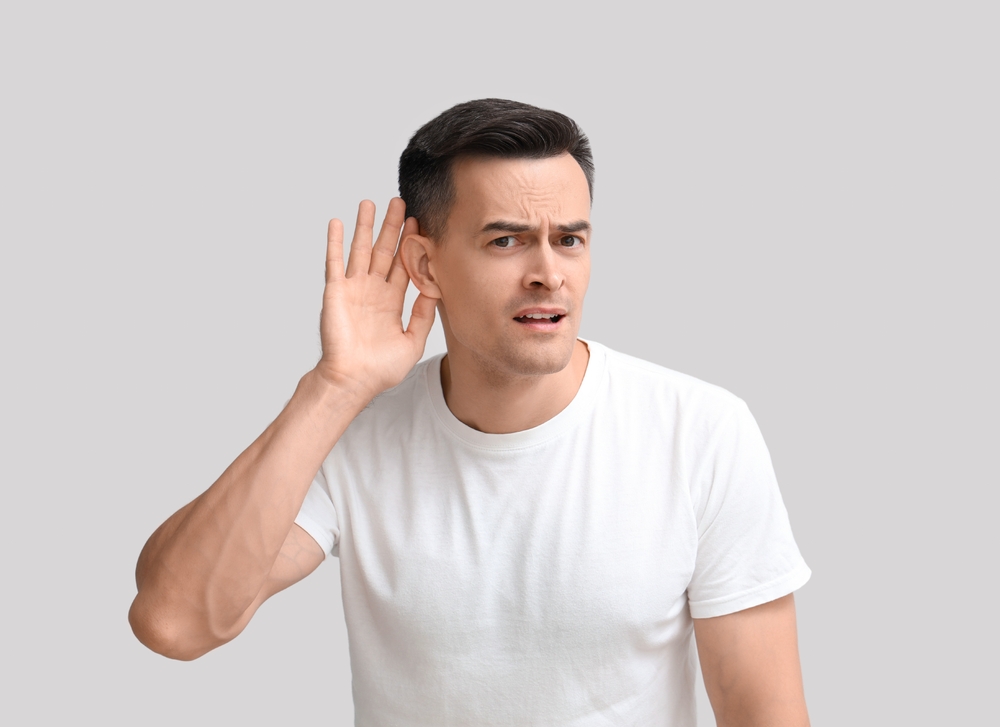
Do you often experience profound mental depletion following extended dialogue or crowded social events?
It is easy to misattribute this fatigue to general stress, lack of sleep, or sensory overload. And it’s true that for introverts or people with sensory issues, social situations can be exhausting. However, in many clinical scenarios, the underlying driver is a neurological phenomenon known as auditory fatigue.
This condition manifests when the brain’s auditory cortex is forced into an overactive state to interpret sound. If auditory input is degraded, the brain must engage in constant phonemic restoration to bridge the gaps in speech. Accumulated listening strain eventually manifests as the profound exhaustion associated with auditory fatigue.
Most individuals fail to distinguish between localized auditory fatigue and general fatigue. However, it can actually be an early sign of hearing difficulties. A professional diagnostic evaluation is necessary to confirm if hearing loss is the root cause of your exhaustion. If this cycle of exhaustion is recurring, consult an audiologist to investigate the influence of hearing loss.
Identifying the Core Drivers of Listening Exhaustion
Various stressors can overtax the auditory cortex, leading directly to the onset of auditory fatigue.
Why Untreated Hearing Impairment Causes Fatigue
Unmanaged hearing loss stands as a primary catalyst for chronic listening exhaustion.
The inability to capture high-frequency sounds forces the brain to work double-time to interpret the message. This perpetual state of “phonemic guessing” elevates cognitive load and triggers rapid burnout during dialogue.
Auditory Fatigue in Social Settings
Acoustically complex settings serve to intensify the demand on the brain’s filtering systems. Environments with significant background chatter make it difficult for the brain to isolate and prioritize relevant audio signals.
In multi-source sound environments, the brain must exert massive energy to suppress irrelevant noise. This biological workload frequently triggers cognitive overload, particularly when any level of hearing loss is present.
Distortion, Tinnitus, and Cognitive Drain
Tinnitus—the perception of internal ringing—exacerbates fatigue by increasing the sheer volume of data the brain must process.
Sound distortion caused by hearing loss can further increase strain, forcing the brain to work even harder to understand speech.
How to Recognize the Onset of Auditory Fatigue
This type of fatigue often degrades both your ability to concentrate and your general vitality. Patients often present with the following indicators:
- Sense of being “wiped out” after a basic discussion
- Difficulty concentrating during meetings or group discussions
- Development of “listening headaches” after long social events
- Feeling “on edge” or frustrated when trying to follow a conversation
- Withdrawing from conversations or social events
- Compulsive need for rest after navigating a noisy environment
Recurring instances of these symptoms suggest that your auditory processing system is operating at an inefficient level.
The Neurology of Effortful Listening
When hearing is clear, the brain can process speech almost effortlessly. However, when hearing loss is present, the brain must allocate more cognitive resources to decode sounds.
In clinical literature, this phenomenon is identified as a surge in cognitive load. This energy shift often leaves the patient struggling with recall and attention while they try to listen. This continuous drain on the brain’s “battery” leads to chronic daily exhaustion. Standard dialogue, which should be easy, becomes a high-intensity cognitive task.
How a Hearing Test Can Identify the Problem
When fatigue becomes a daily burden, a professional evaluation provides the necessary data for a solution. In the clinic, an expert will assess your ability to detect specific pitches and interpret clear speech. An audiologist may simulate real-world noise to see how your brain manages complex auditory environments.
A professional assessment confirms the link between your ears and your exhaustion, enabling targeted care. Early diagnosis facilitates prompt intervention, preventing the onset of chronic cognitive load issues.
Restoring Energy Through Hearing Care
Addressing the underlying impairment is the most direct way to eliminate auditory fatigue.
Advanced hearing aids utilize AI to sharpen speech signals while simultaneously suppressing irrelevant environmental noise. Consequently, the brain receives a high-fidelity signal that requires no guesswork or phonemic restoration.
When listening becomes easier, many people notice improvements in:
- Sustained cognitive stamina during the workday
- Sharper concentration when speaking with others
- Feeling relaxed and confident in noisy environments
By reducing neural over-exertion, your daily life regains its sense of ease and fluidity.
Is it Time for a Professional Hearing Check?
A professional screening is recommended if you identify with these patterns:
- Socializing feels like a high-intensity mental workout
- Friends or family members mention that you often ask them to repeat what they’ve said
- You find yourself “guessing” at words in loud settings
- You have begun declining invitations because you are tired of the effort to hear
Early action on hearing impairment is a foundational step in preserving your mental and social health.
FAQs About Auditory Fatigue
Auditory Fatigue vs. Hearing Loss: What’s the Difference?
No—fatigue is the “symptom” (burnout), whereas loss is often the “cause” (the impairment). While they are different, hearing loss is the direct driver of most fatigue cases.
Do Hearing Aids Help with Exhaustion?
Yes. By improving sound clarity and reducing background noise, hearing aids can significantly decrease the mental effort required to understand speech.
Can I Recover from Auditory Fatigue?
Typically, this fatigue is transient and resolves once the auditory system is supported by clinical care.
Say Goodbye to Post-Conversation Burnout
You shouldn’t feel exhausted after everyday conversations. Feeling “wiped” after a party is a signal that your brain is struggling to manage its cognitive load.
Begin your journey back to energy by booking a comprehensive hearing test now. The path to social confidence and mental clarity begins with accurate hearing data.